 Skip to content




From Field to Fabulous: The Remarkable Journey of Cotton Poplin

There is an enviable kind of woman who always seems to look impossibly composed. Her shirt is crisp but never stiff, her dress somehow elegant without appearing remotely overthought, and, even after a sweaty slog on the tube, she miraculously retains an air of quiet polish. Her style secret? Look no further than cotton poplin.
So understated you might not have even heard of it, cotton poplin is the backbone of modern dressing precisely because it doesn’t try too hard. It is breathable, beautifully structured, endlessly versatile, and capable of making even the simplest white shirt feel cinematic.

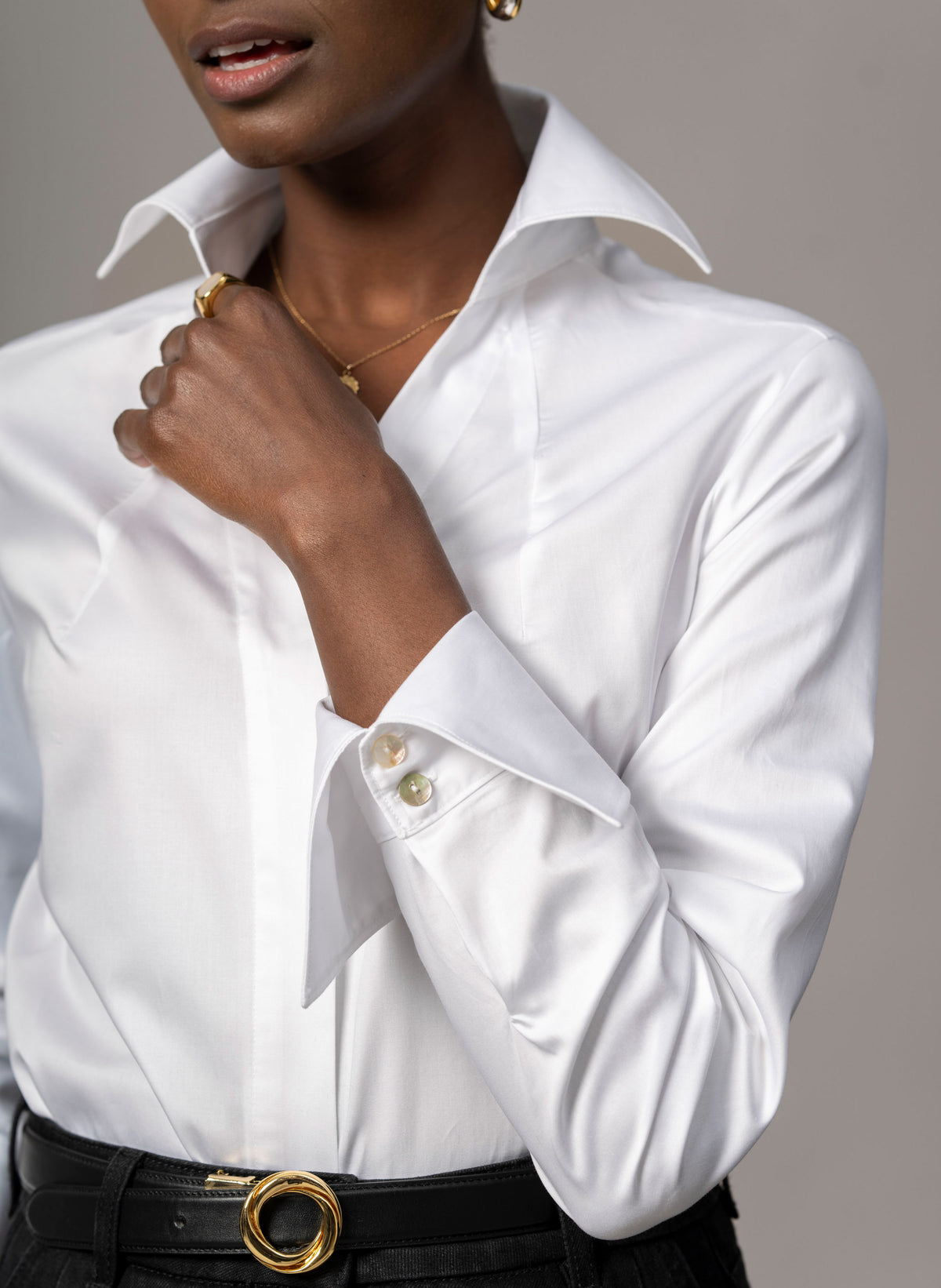
The Shirt Company's Alessia Shirt in cotton poplin
But behind the softly tailored silhouette lies a surprisingly fascinating journey. A cotton poplin shirt begins thousands of miles away in sunlit cotton fields before passing through spinning mills, weaving rooms humming with precision machinery, and small European factories where craftsmanship still matters enormously. Along the way, modern sustainable practices are quietly reshaping how this beloved fabric is produced.
The History of Poplin

Image credit: History Hit
The word poplin has aristocratic heritage. Some historians trace the name back to papelino, a fabric produced in Avignon, France, during the 15th century, when the city was closely associated with the papal court. The other camp points to Poperinghe, a Flemish town in Belgium that was a major cloth-trading hub as early as the 11th century. Wherever the name might come from, we know for certain that early poplins were generally woven from silk and wool and prized for their smooth finish and subtle lustre.
Over time, as cotton became more widely available and textile manufacturing evolved, cotton poplin emerged as a practical descendant of those earlier luxury fabrics. This incarnation retained the refined surface and clean structure of traditional poplin, while offering breathability and a versatility that made it perfect for everyday wear.
Stage One: Growing

Image credit: Wikicommons
The story begins in sun-drenched fields across Southern Europe — particularly Greece, Southern Italy, and Spain. While Europe isn't the world's largest cotton producer, what it lacks in scale it makes up for in standards.
The Better Cotton Initiative (BCI), founded in 2005, is the world's largest cotton sustainability programme, working to minimise environmental impact, reduce water use, limit harmful chemicals, and enhance economic development for farming communities. BCI-certified cotton is grown with dramatically less water and virtually no synthetic pesticides. Meanwhile, OCS (Organic Content Standard) certification guarantees that cotton is genuinely organic from seed to sale.
Fun fact: Organic cotton farming has reduced pesticide use on cotton crops by 90% and water use during the cotton-growing cycle by 60%
Stage Two: Ginning

Image credit: Wikicommons
Once the cotton has been plucked, it’s time for a day on the (cotton) gin. Ginning is the stage where fluffy cotton fibres are separated from seeds, leaves and prickly sticks by mechanical means.
Modern gins can process thousands of kilograms of cotton per hour, but the principle hasn’t changed much since the invention of the cotton gin in the 18th century. What has changed is efficiency and waste reduction — newer systems recover more usable fibre and produce fewer impurities.
The result is “clean cotton lint,” ready for spinning.
Stage Three: Spinning

Image credit: Wikicommons
This is where raw cotton begins to resemble threads.
The fibres are cleaned, combed, and twisted into continuous strands of yarn. The quality of this stage determines everything that follows. Long-staple cotton fibres create smoother, stronger yarns — and ultimately, finer poplin.
A lesser-known detail: spinning is all about tension and twist. Too loose, and the yarn breaks. Too tight, and it loses softness. It is a surprisingly delicate balancing act.
In modern European mills, spinning often takes place in highly controlled environments where humidity, temperature, and fibre alignment are carefully managed to ensure consistency.
Stage Four: Weaving

Image credit: Wikicommons
Poplin is defined by its weave — a tightly structured plain weave that uses fine warp threads and slightly thicker weft threads. This creates its signature smooth surface and subtle horizontal rib.
It is this structure that gives poplin its “expensive” look: clean, crisp, and lightly lustrous without any artificial shine.
Weaving often takes place in small to medium-sized European mills, particularly in countries with strong textile traditions such as Italy and Portugal. These mills frequently specialise in shirting fabrics and operate with a high degree of craftsmanship rather than mass production.
Fun fact: a single high-speed loom can contain over 10,000 threads working in perfect synchronisation. If one breaks, the machine stops immediately.
Stage Five: Dying and Finishing

Image credit: Wikicommons
Once woven, the fabric is dyed and finished. This stage has historically been one of the most environmentally fraught parts of textile production due to water and chemical use, but it is also where some of the most significant innovations are happening.
Modern European mills increasingly use:
-
low-impact dyes,
-
water recycling systems,
-
closed-loop dye baths,
-
and OCS-certified organic cotton inputs.
OCS certification is particularly important here because it ensures traceability of organic fibre content throughout the entire supply chain — from field to finished fabric.
Finishing also includes processes that soften the fabric and enhance its drape while preserving the crispness that makes poplin so distinctive.
Stage Six: Cutting and Sewing

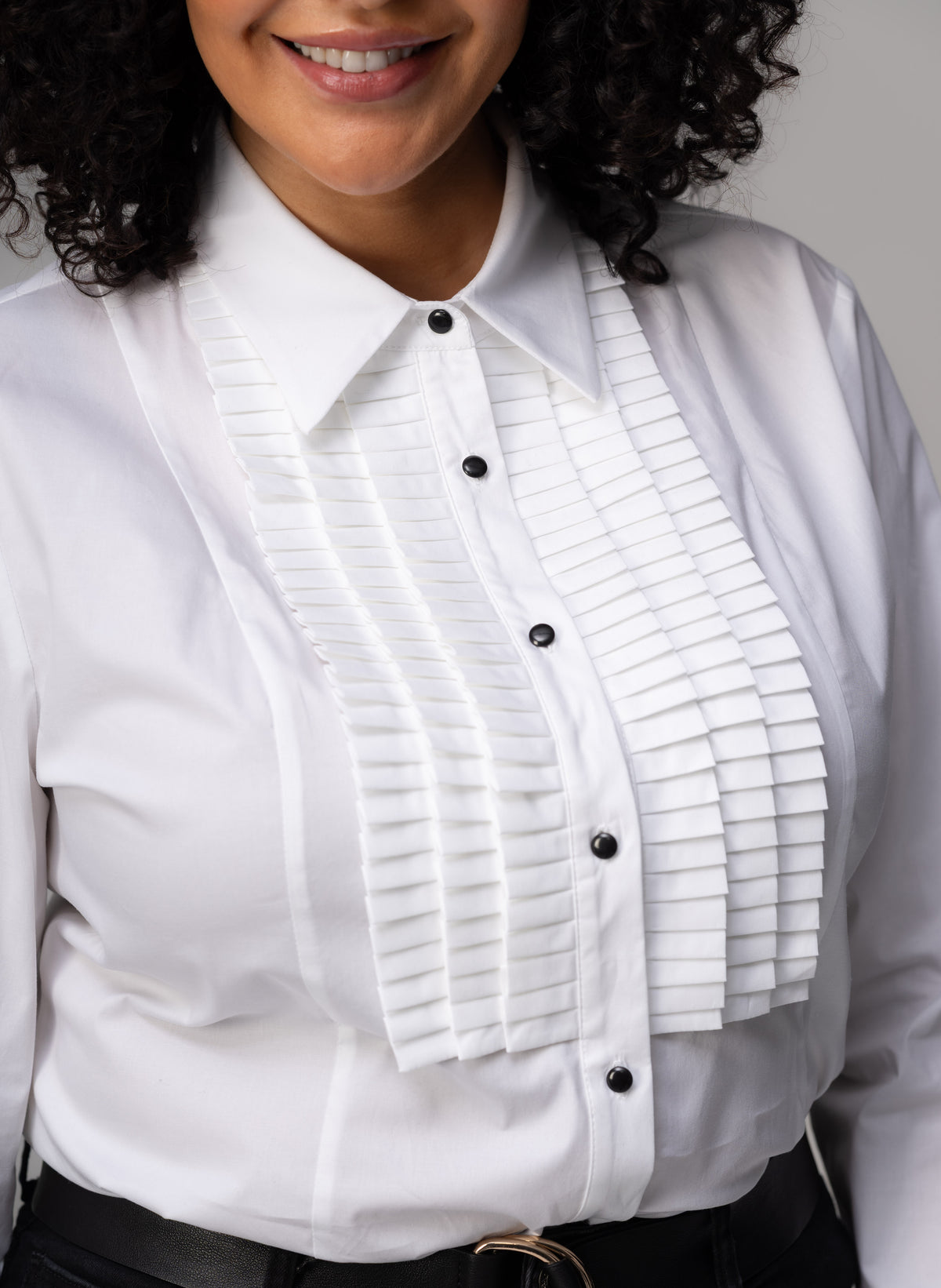
The Shirt Company's Vera wrap shirt in cotton poplin
Finally, the fabric reaches garment makers, often small workshops or specialist factories across Europe that focus on precision tailoring. After being designed in London, the patterns from The Shirt Company are stitched together in small, ethical factories across Eastern Europe and Turkey.
Cotton poplin is a favourite among pattern cutters because it behaves predictably: it holds structure, presses cleanly, and allows for sharp lines in collars, cuffs, and seams.
This is where women’s poplin shirts and dresses take shape, from oversized boyfriend shirts to cinched shirtdresses designed for everyday versatility.
A well-made poplin garment is not designed for a single season. It is designed to be worn, washed, softened, and returned to again and again.
That longevity is one of its most important environmental qualities.
Stage Seven: Wearing!

The Shirt Company's Antoinette Shirt in cotton poplin
Fashion is notoriously fickle. Hems rise and fall, silhouettes expand and contract, colours sweep in and out with each Pantone fad. Yet cotton poplin remains.
Perhaps because it represents something increasingly rare: clothing designed to live in as opposed to simply photograph well. Poplin offers ease without sloppiness, elegance without discomfort, and polish without excess.
In a culture addicted to novelty, cotton poplin quietly proposes something radical. That the best wardrobe pieces are often the ones that stay with us longest.

